Terms of Service
Last Updated: September 7, 2026
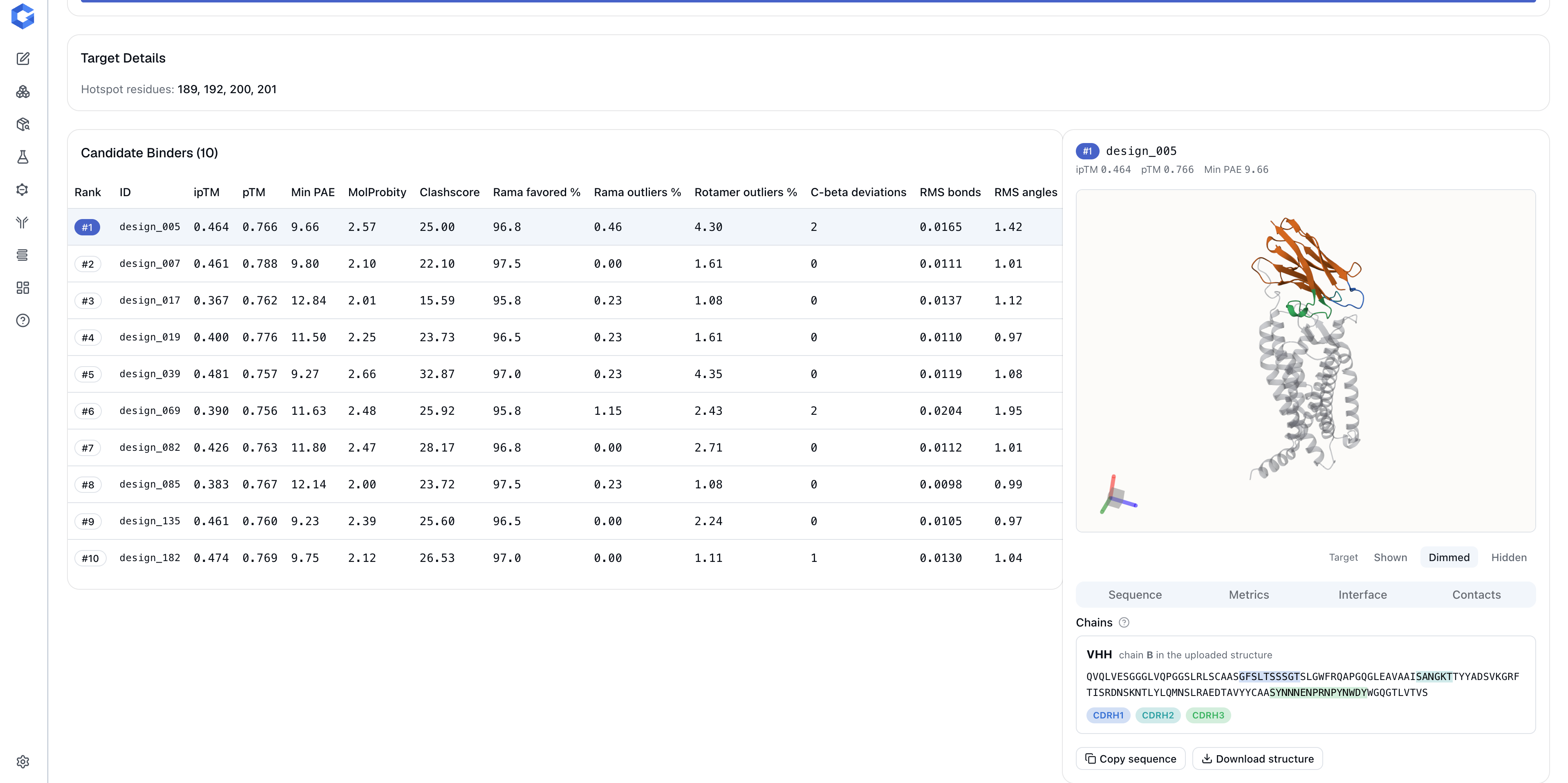
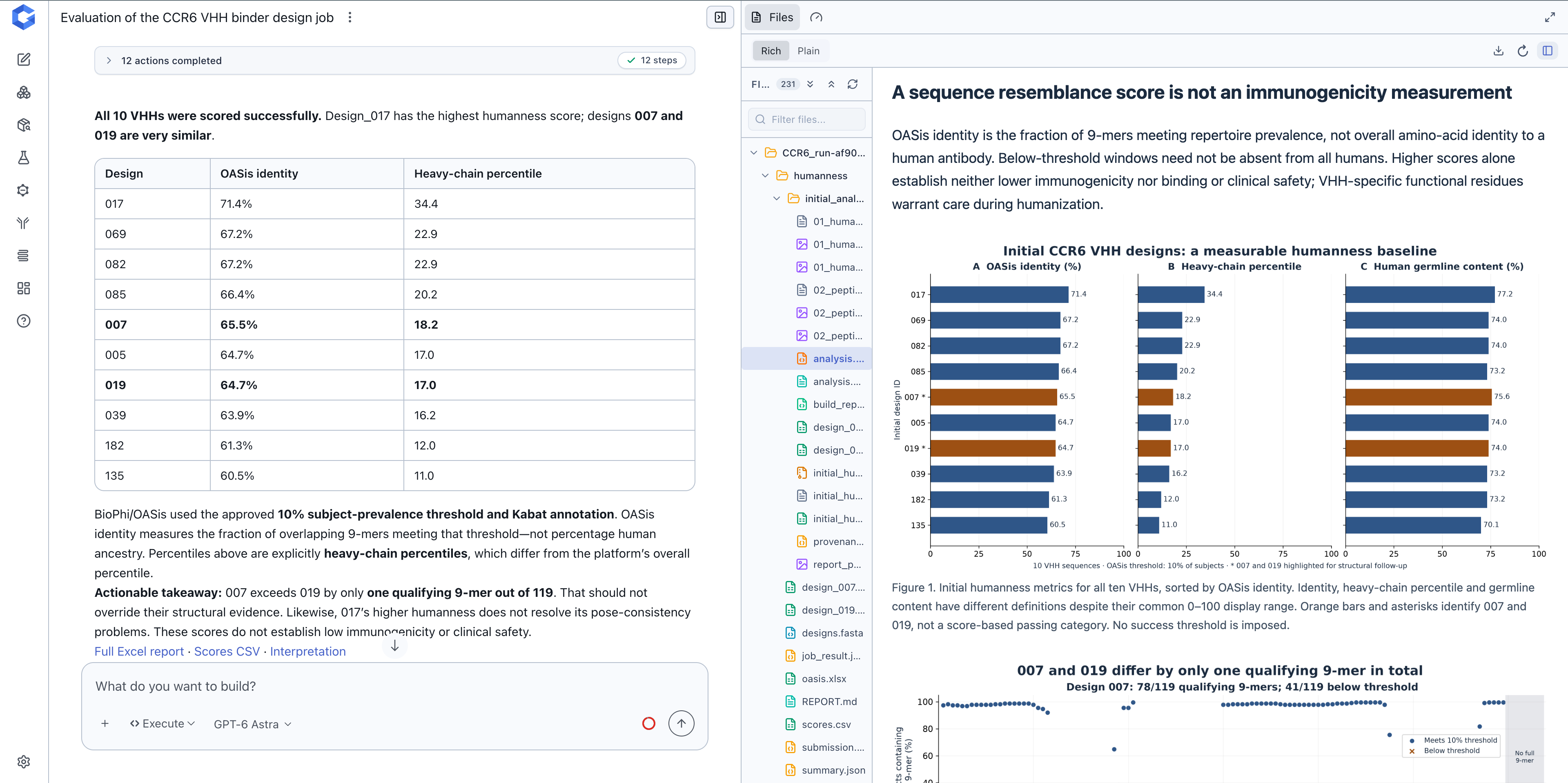
Effective Date: September 7, 2026
Welcome to novadde. These Terms of Service (the “Agreement” or “Terms”) govern your access to and use of novadde, an agentic AI platform accessible at https://agent.geodesiclab.com/ (together with all related features, functionality, and content, the “Service”), provided by Geodesic Intelligence Inc., a Delaware corporation (“Company,” “we,” “us,” or “Geodesic”).
By creating an account, accessing, or using the Service, you agree to be bound by this Agreement and by our Privacy Policy, which is incorporated by reference. If you do not agree, do not access or use the Service.
If you are using the Service on behalf of an organization, you represent that you have authority to bind that organization to this Agreement, and “you” refers to both you and that organization.
1. Definitions
- “Account” means the credentialed account you use to access the Service.
- “Agent” means an AI-driven software agent made available through the Service that can converse, reason, take actions, and generate Output, including by invoking Company Models or Third-Party LLM Providers.
- “Company Models” means machine learning models developed, trained, or fine-tuned by or for the Company and made available through the Service.
- “Third-Party LLM Provider” means any third-party provider of large language models or related AI services that the Service connects to or routes requests through (e.g., via API), whether using credentials you supply or arrangements the Company maintains.
- “User Content” means any data, files, text, prompts, sequences, structural files, code, or other materials you upload, submit, or otherwise provide to the Service.
- “Output” means any response, result, prediction, design, code, text, or other content generated by an Agent, a Company Model, or a Third-Party LLM Provider through the Service in response to User Content or your instructions, including without limitation protein structure predictions and protein designs (“Scientific Output”).
2. The Service
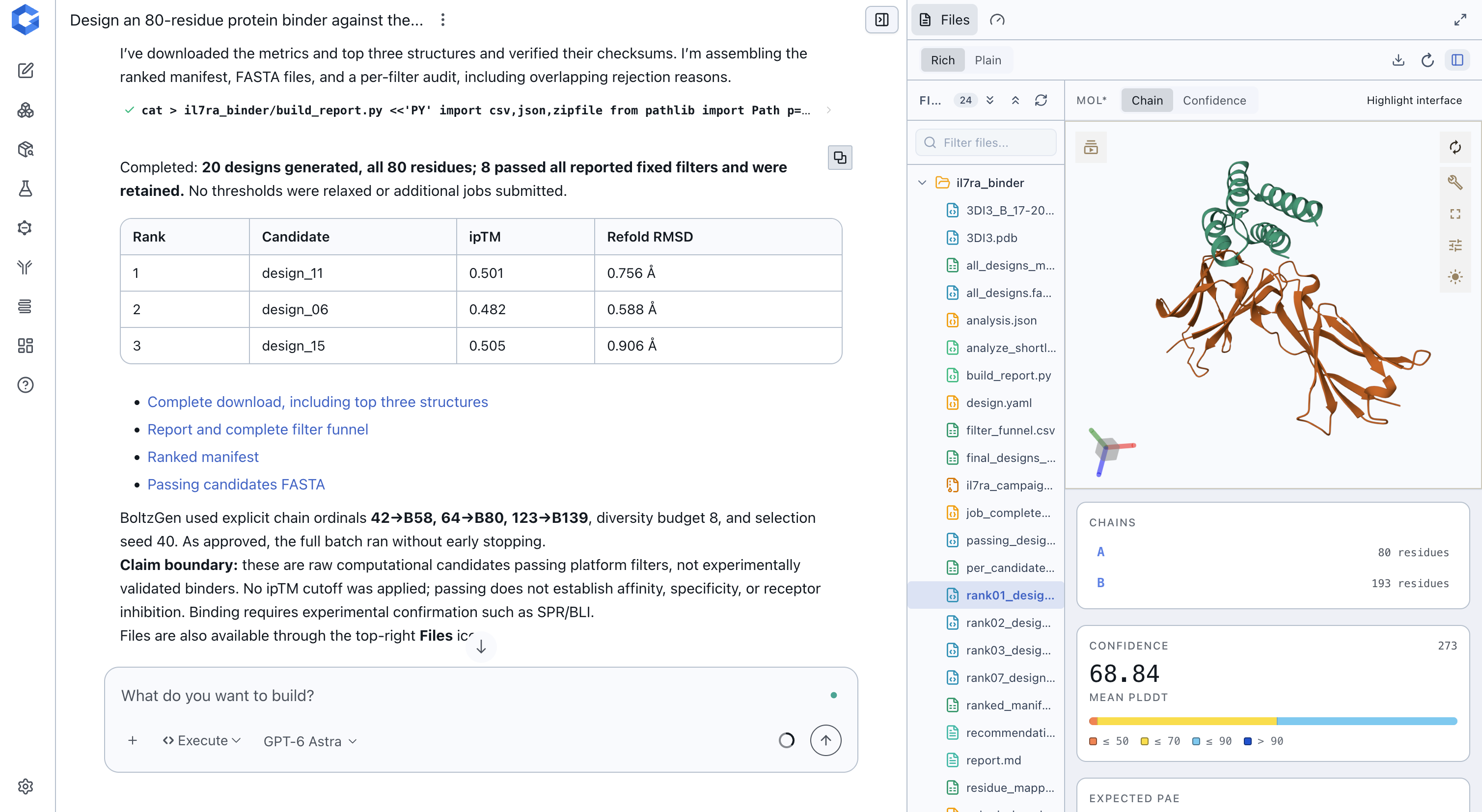
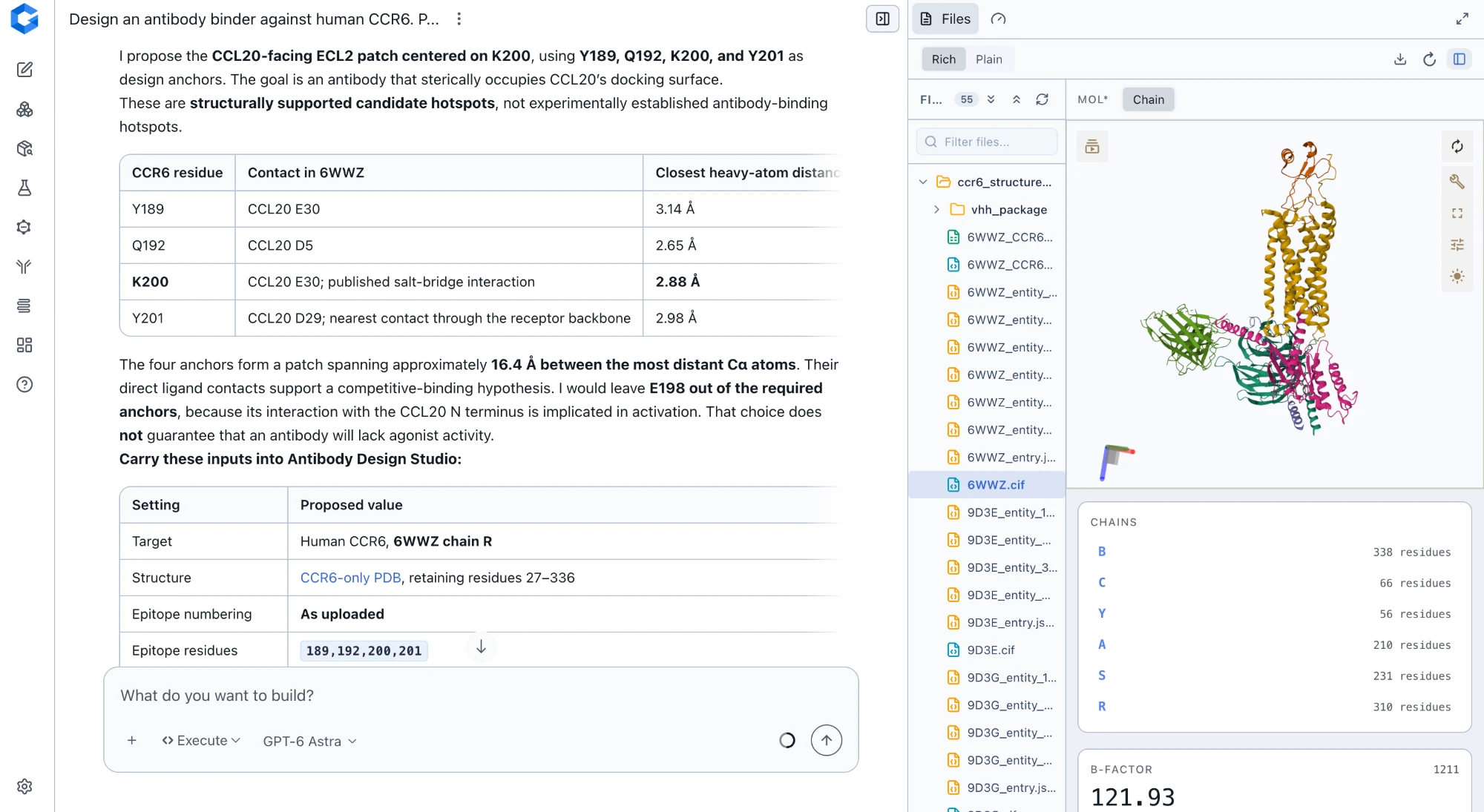


2.1 General. The Service lets you interact with Agents that can hold general-purpose conversations, write and execute code, and perform scientific tasks such as protein structure prediction and protein design, by drawing on Company Models and/or Third-Party LLM Providers you authenticate against or that the Company makes available.
2.2 Third-Party LLM Providers. Where the Service routes your requests or User Content to a Third-Party LLM Provider, that provider’s own terms of service, acceptable use policy, and privacy policy also apply to the processing performed by that provider, and the Company does not control, and is not responsible for, that provider’s handling of data or the accuracy, safety, or legality of Output it produces. You are responsible for ensuring your use of any Third-Party LLM Provider through the Service complies with that provider’s terms.
2.3 Company Models. Output generated using Company Models is provided subject to the same disclaimers and limitations set out in this Agreement as any other Output.
2.4 No Guarantee of Availability. We will use commercially reasonable efforts to keep the Service available, but the Service may be modified, interrupted, or suspended for maintenance, security, legal, or operational reasons, with or without notice, and we are not liable for resulting unavailability.
2.5 Changes to the Service. We may add, change, or remove features of the Service, including which Company Models or Third-Party LLM Providers are available, at any time.
3. Eligibility and Accounts
3.1 Eligibility. You must be at least 18 years old and have the legal capacity to enter into this Agreement to use the Service. The Service is not directed at, and may not be used by, children.
3.2 Registration. You must provide accurate registration information and keep your Account credentials confidential. You are responsible for all activity under your Account. Notify us promptly at contact@geodesiclab.com of any unauthorized use.
3.3 Account Ownership. Accounts are for your own use and may not be shared, sold, or transferred without our written consent. We may suspend or terminate an Account we reasonably believe is compromised, fraudulent, or in breach of this Agreement.
4. License Grant
Subject to your compliance with this Agreement, the Company grants you a limited, non-exclusive, non-transferable, revocable license to access and use the Service for your internal business or personal purposes. All rights not expressly granted are reserved.
5. Subscription Plans, Fees, and Payment
5.1 Plans. The Service may be offered under free and paid subscription plans with different features, usage limits, and pricing, as described at checkout or in your order form.
5.2 Billing. Paid plans are billed in advance on a recurring basis (e.g., monthly or annually) and will automatically renew unless cancelled before the renewal date, unless otherwise stated at signup.
5.3 Taxes. Fees are exclusive of applicable taxes, which you are responsible for unless we are required by law to collect them.
5.4 Refunds and Cancellation. You may cancel a paid plan at any time, effective at the end of the current billing period. Except as required by law or as expressly stated at the time of purchase, fees are non-refundable.
5.5 Fee Changes. We may change our fees on reasonable prior notice; changes apply to your next billing cycle.
6. User Content
6.1 Ownership. You retain all rights you hold in your User Content. You represent that you have all rights necessary to submit your User Content and that it does not violate any law or third party’s rights (including privacy, intellectual property, or biosafety obligations).
6.2 License to Operate the Service. You grant the Company a worldwide, non-exclusive, royalty-free license to host, process, transmit, and reproduce your User Content solely as necessary to provide, secure, and support the Service, including by sending it to the Company Models or Third-Party LLM Providers you direct the Service to use.
6.3 Improving Company Models. Unless you are on a plan or enterprise agreement that states otherwise, you grant the Company a worldwide, non-exclusive, royalty-free license to use de-identified or aggregated User Content and Output to analyze, train, and improve Company Models and the Service. You may opt out of this use by contacting contact@geodesiclab.com, subject to plan availability.
6.4 Your Responsibility. You are solely responsible for ensuring you have the right to upload any sequence, structural file, or other data, and that doing so does not violate any biosafety, export control, or data protection law.
7. Output
7.1 License to You. Subject to your compliance with this Agreement and applicable law, as between you and the Company, the Company does not assert ownership over Output generated from your User Content, and you may use it as permitted by your plan.
7.2 No Uniqueness or Non-Infringement Warranty. The Company may generate identical or similar Output for other users and does not represent that any Output is unique, novel, accurate, or free of third-party rights. You waive any claim against the Company arising from the similarity of Output generated for other users.
7.3 Reserved License. The Company retains a worldwide, non-exclusive, royalty-free, sublicensable license to use Output (in de-identified or aggregated form) to analyze, operate, and improve the Service and Company Models, consistent with Section 6.3.
7.4 Third-Party LLM Output. Output generated via a Third-Party LLM Provider may also be subject to that provider’s own terms governing ownership and use of its outputs.
8. Acceptable Use
You will not, and will not permit any third party to:
- 8.1 Reverse engineer, decompile, or attempt to extract the source code, model weights, or training data of the Service, Company Models, or any Agent;
- 8.2 Use the Service to develop a competing product or service, or to train, fine-tune, or improve any third-party model, using Output obtained from the Service, without our prior written consent;
- 8.3 Interfere with, disrupt, scan, probe, or attempt to gain unauthorized access to the Service or any system or network connected to it;
- 8.4 Use the Service to generate or facilitate malware, unauthorized surveillance, fraud, harassment, or other unlawful or abusive content or conduct;
- 8.5 Use the Service, Scientific Output, or any Designed Proteins for any purpose that poses a risk to human health, biosafety, biosecurity, public safety, or the environment, including developing hazardous biological agents or conducting unauthorized high-risk experiments; or
- 8.6 Use the Service in violation of applicable law, export control or sanctions regulations, or in a manner that infringes the rights of others.
We may investigate suspected violations and suspend or terminate access without liability to you.
9. Third-Party Services
The Service may link to, integrate with, or route requests to third-party services, including Third-Party LLM Providers and payment processors. We are not responsible for third-party services, and your use of them is governed by their own terms.
10. Intellectual Property
Except for User Content and Output as described above, the Company and its licensors own all right, title, and interest in and to the Service, including all software, Company Models, trademarks, and content provided by the Company, and no rights are granted except as expressly stated in this Agreement. You may not use “novadde,” “Geodesic Intelligence,” or related marks without our prior written consent.
11. Confidentiality
Each party will protect the other’s non-public information disclosed in connection with the Service using reasonable care, and will use it only to perform under this Agreement, except as required by law.
12. Feedback
If you provide us with feedback or suggestions about the Service, you grant us a perpetual, irrevocable, royalty-free license to use it without restriction or obligation to you.
13. Term, Suspension, and Termination
This Agreement remains in effect while you use the Service. We may suspend or terminate your access for breach of this Agreement, non-payment, legal requirement, or discontinuation of the Service, with notice where practicable. You may terminate by ceasing use and cancelling your subscription. Sections that by their nature should survive (including Sections 6.3, 7, 10–17) will survive termination.
14. Disclaimers
14.1 THE SERVICE, COMPANY MODELS, AND OUTPUT ARE PROVIDED “AS IS” AND “AS AVAILABLE,” WITHOUT WARRANTIES OF ANY KIND, EXPRESS OR IMPLIED, INCLUDING MERCHANTABILITY, FITNESS FOR A PARTICULAR PURPOSE, AND NON-INFRINGEMENT.
14.2 AI-generated Output, including Scientific Output such as protein structure predictions and designs, may be inaccurate, incomplete, or unsuitable for your purposes. You are solely responsible for independently verifying and assessing any Output before relying on it. Output is provided for research and informational purposes only, is not validated for clinical, diagnostic, or therapeutic use, and must not be used as a substitute for professional medical, legal, or other expert advice.
14.3 We do not warrant that the Service will be uninterrupted, secure, or error-free, or that any code, analysis, or scientific prediction generated by an Agent is fit for production or experimental use without independent review.
15. Limitation of Liability
TO THE MAXIMUM EXTENT PERMITTED BY LAW, THE COMPANY WILL NOT BE LIABLE FOR ANY INDIRECT, INCIDENTAL, SPECIAL, CONSEQUENTIAL, OR PUNITIVE DAMAGES, OR ANY LOSS OF PROFITS, DATA, OR GOODWILL, ARISING FROM YOUR USE OF THE SERVICE. THE COMPANY’S TOTAL LIABILITY FOR ANY CLAIM ARISING OUT OF OR RELATING TO THIS AGREEMENT WILL NOT EXCEED THE AMOUNTS YOU PAID TO THE COMPANY FOR THE SERVICE IN THE 12 MONTHS PRECEDING THE CLAIM.
16. Indemnification
You will indemnify and hold harmless the Company and its affiliates from any claims, losses, and expenses (including reasonable attorneys’ fees) arising from your User Content, your use of the Service in violation of this Agreement, or your violation of applicable law or third-party rights.
17. Export Control and Sanctions
You may not access or use the Service in violation of applicable U.S. export control, economic sanctions, or trade laws and regulations. You may not use the Service if you are a prohibited or restricted person or entity, or for any prohibited end use, including prohibited military, military-intelligence, nuclear, missile, chemical, biological, or other weapons-related activities, to the extent prohibited by applicable law. You may not provide access to the Service to any person or entity where doing so would violate applicable export control or sanctions laws.
18. Governing Law and Dispute Resolution
This Agreement is governed by the laws of the State of Delaware, without regard to its conflict-of-laws principles. Any dispute arising out of or relating to this Agreement or the Service will be brought exclusively in the state or federal courts located in New Castle County, Delaware, and you consent to the personal jurisdiction of those courts.
19. Miscellaneous
19.1 This Agreement, together with the Privacy Policy, constitutes the entire agreement between you and the Company regarding the Service.
19.2 If any provision is held unenforceable, the remaining provisions remain in full force and effect.
19.3 Our failure to enforce any right is not a waiver of that right.
19.4 You may not assign this Agreement without our consent; we may assign it in connection with a merger, acquisition, or sale of assets.
19.5 Neither party is liable for delay or failure to perform due to causes beyond its reasonable control.
19.6 Notices to you may be sent to the email associated with your Account or posted on the Service.
19.7 This Agreement does not create any partnership, joint venture, agency, or employment relationship between you and the Company.
20. Changes to These Terms
We may update this Agreement from time to time. Material changes will be notified via the Service or by email before they take effect. Continued use of the Service after changes take effect constitutes acceptance of the updated Agreement.
21. Contact Us
Questions about these Terms may be directed to contact@geodesiclab.com.
 Geodesic Intelligence